The Future Homes Standard 2026, Building Regulations & SAP
To meet the Future Homes Standard and achieve the UK’s net zero targets by 2035, developers must move away from traditional heating systems and embrace low-carbon technologies like heat pumps. At Alto Energy, we partner with housebuilders to design and deliver efficient, compliant heating systems that align with evolving Building Regulations and help futureproof new developments.
What is the future homes standard?
The Future Homes Standard (FHS) is a major update to building regulations in England designed to drastically reduce carbon emissions from new homes as part of the UK’s net‑zero ambitions. Under the updated timeline confirmed by the government, the standard will be fully implemented from 2028, with a transition period allowing industry time to prepare.
The core aim of the standard is to ensure new homes are zero‑carbon ready, built with highly efficient fabric and low‑carbon technologies so that, as the electricity grid continues to decarbonise, they are capable of operating with near‑zero emissions.
Once fully in effect, the Future Homes Standard will require most new homes to:
Use low‑carbon heating systems (such as air source or ground source heat pumps) instead of traditional gas boilers.
Incorporate higher levels of energy efficiency, including improved insulation and airtightness.
Include renewable energy technologies such as solar panels or other on‑site generation where appropriate.
These changes are expected to reduce carbon emissions from new homes by around 75% compared with homes built under the 2013 standards.
“
New minimum energy performance requirements will reduce carbon emissions by at least 75% compared to homes built to 2013 standards. They are being introduced with a 12‑month lead‑in period followed by a 12‑month transitional period, giving manufacturers, installers and developers time to prepare.
- DESNZ
Future homes standard timeline
The Future Homes Standard has been confirmed, marking a significant shift in how new homes in England are designed and built. Here's a breakdown of key milestones:
2021: The interim update to Building Regulations (Part L and F) introduced higher energy efficiency standards as a stepping stone to the Future Homes Standard.
2023–2024: Ongoing consultation and industry preparation. Developers, specifiers, and installers began adapting to low-carbon technologies such as air source heat pumps and improved insulation.
2026: The government formally confirmed the Future Homes Standard as part of its Warm Homes Plan, with a 12-month lead-in period followed by a 12-month transitional period to give manufacturers, installers, and developers time to prepare.
2028: The Future Homes Standard comes fully into force. From this point, all new homes in England must comply with the updated regulations.
This means that from 2028, traditional gas boilers will no longer be permitted in new builds. Instead, low-carbon heating solutions like heat pumps and on-site renewable energy such as solar panels will become the standard.
What has the government said?
heat pumps in new builds
At Alto Energy, we pride ourselves on being industry leaders in heat pump solutions, offering a full range of services that simplify the journey toward compliance with the Future Homes Standard. Our developer-focused business model gives you easy access to expertly designed, energy-efficient heat pump systems.
Our air source heat pumps, ground source heat pumps, and underfloor heating solutions offer substantial carbon savings, simplifying compliance with Building Regulations. Beyond regulatory benefits, these technologies enhance the appeal of new homes by offering low running costs and creating a comfortable, aesthetically pleasing living environment for your customers.
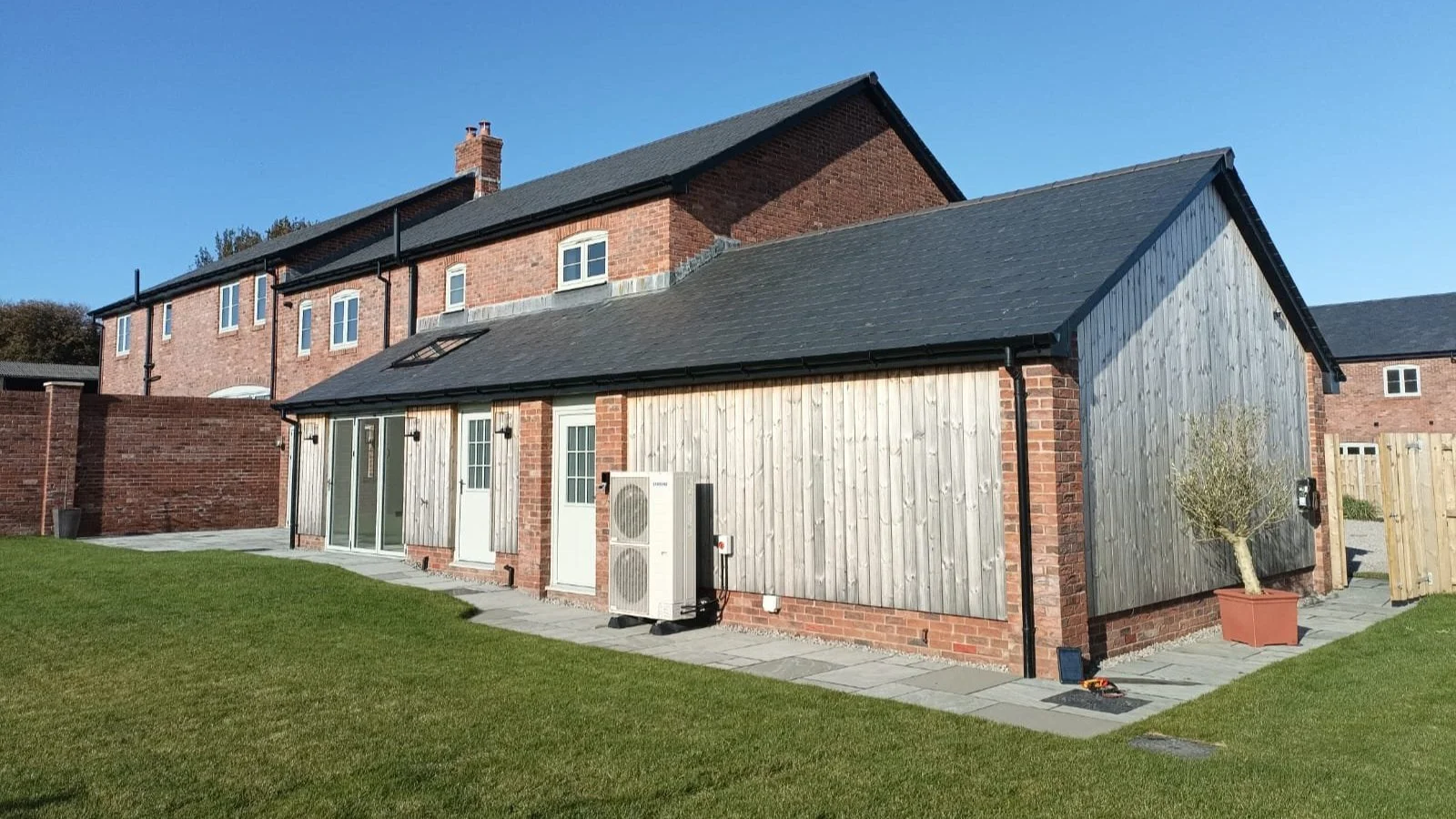
Low-carbon heat pumps play a key role in meeting the Future Homes Standard.
Key Services Provided
Here's how our expertise can benefit your projects:
- Bespoke heat pump design specifically for each property type
- Design, supply and commissioning service with full MCS accreditation
- Training for your contractors or access to our trusted nationwide installer network
- Comprehensive handover pack, including certification and user instructions
- Lifetime technical support, plus service and maintenance options for homeowners
With Alto Energy as your partner, you can simplify compliance, reduce complexity, and deliver homes that meet the Future Homes Standard with confidence.
Frequently Asked Questions
-
Not yet, but they will be. From 2028, heat pumps will be mandatory in most new builds in England under the Future Homes Standard. Until then, installation is voluntary, though developers and housebuilders who plan ahead now will avoid costly redesigns and delays further down the line.
-
From 2028, yes. The Future Homes Standard requires that most new homes in England include a low-carbon heating system, with heat pumps being the most common solution.
-
In new builds, absolutely. The government has confirmed that heat pumps will be the default heating system for new homes from 2028. For existing homes, the shift will be more gradual, driven by schemes such as grants, low-interest loans, and tightening energy efficiency requirements.
-
In retrofit situations, the upfront cost of a heat pump is generally higher than a boiler. But in new builds, the picture looks very different. When all of the heating distribution is being installed from scratch anyway, the cost difference between fitting a heat pump and a gas boiler is much smaller than most people expect.
Factor in the significant expense of bringing a gas connection to site, and in many cases a heat pump can actually work out cheaper to install in a new build development than a traditional gas boiler system.
Building Regulations & SAP: How Heat Pumps Help You Comply
What are part L Building Regulations?
The Building Regulations set the minimum standards for how buildings in the UK are designed, constructed, and made energy efficient. A key focus is on reducing carbon emissions from new buildings.
As stated in the regulations:
“Where a building is erected, it shall not exceed the target CO₂ emission rate for the building…”
Part L of the Building Regulations focuses specifically on the conservation of fuel and power. It requires that buildings limit heat loss and gain, use energy-efficient services with effective controls, and are properly commissioned. It also mandates that clear information is provided to ensure the building can be operated efficiently over its lifetime.
What is SAP?
The Standard Assessment Procedure (SAP) is the UK Government’s approved method for calculating a building’s emission rate. The Government sets targets that new buildings must achieve, and the minimum standards are stated within Part L.
Target Emission Rate (TER): For any given property, a TER is established. This is the emission rate for a notional dwelling of identical dimensions to that which is being built, based on the minimum requirements stated within Part L.
Dwelling Emission Rate (DER): The actual building must achieve a DER lower than the TER to be compliant. To meet these targets, developers must carefully specify materials and technologies that reduce carbon emissions of the property.
Why Heat Pumps Perform So Well in SAP
Heating is one of the largest contributors to a building’s CO₂ emissions. That’s where heat pumps make a major difference.
Heat pumps deliver up to 4 units of heat for every 1 unit of electricity used — making them one of the most efficient and future-ready heating options. As the UK’s grid becomes increasingly powered by renewables, the emissions associated with electricity continue to fall, making heat pumps an even cleaner solution over time.
Heat Pumps and SAp Appendix Q
Not all heat pumps are created equal. SAP sets out benchmark efficiencies that can be used for ground source heat pumps and air source heat pumps. However, certain heat pump manufacturers' heat pumps are listed within the SAP Appendix Q Database.
Heat pumps listed within this database are allowed to use their specific performance figures, as opposed to the generic performance figures stipulated with the main body of the SAP calculation. This provides a further reduction in the CO2 emission rate for the building.
At Alto Energy, all our heat pumps are listed in the SAP Appendix Q Database, ensuring developers gain maximum benefit in SAP assessments and Part L compliance.
Ready to Specify a Compliant Heating System?
Contact our team to discuss how our heat pump solutions can help you achieve full compliance with Building Regulations Part L.
Our Accreditations
We take the quality of our products and services very seriously. This is reflected in the accreditations we have obtained in order to ensure that we are completely compliant with all of the relevant industry standards.