

Can you get an MCS certificate retrospectively for a heat pump
Occasionally, housebuilders and developers ask us if a heat pump installation can be certified with an MCS certificate after the fact. The short answer is no.

Jump Ahead
An MCS certificate is issued at the time a heat pump is installed by an MCS certified installer. The certificate confirms that the system was designed, installed, and commissioned in line with the standards set out by the Microgeneration Certification Scheme.
If a heat pump has already been installed by a non-MCS installer, it is not possible to retrospectively certify the installation. This is because the MCS process requires verification of the system design, commissioning, and installation practices at the point the work is carried out.
For housebuilders and developers, however, it raises a much more important question. If MCS certification cannot be obtained later, why is it so important to make sure your heat pump installations qualify for it from the start?
Why MCS certification matters for housebuilders and developers
For developers, MCS certification does far more than simply produce a certificate. It provides clear evidence that the heat pump has been properly designed, installed, and commissioned according to recognised industry standards.

That assurance can have several knock-on benefits across compliance, warranty requirements, and the long-term experience of the homeowner.
When you are delivering multiple plots on a development, getting this right from the beginning can prevent complications further down the line.
Better SAP results and stronger EPC performance
One of the biggest technical reasons developers should prioritise MCS certification is the impact it can have on SAP calculations.
If a heat pump system is not installed under MCS, it will typically be registered in SAP simply as a generic heat pump. In many cases this results in an assumed coefficient of performance (CoP) of around 1.9. When a system is installed and certified under MCS, the calculated performance is usually much higher. In many cases it can be around 3.5 or more, depending on the system design and specification.
New homes must meet energy efficiency standards under Part L of the Building Regulations. If the heating system is assumed to be inefficient, the property’s calculated emissions increase. This can make it harder to pass Part L without introducing additional measures elsewhere in the design.
That difference can have a direct impact on the energy performance of the home, which in turn affects EPC ratings and compliance with Building Regulations.
Increasing scrutiny from Building Control
Building Control officers are also placing increasing emphasis on documentation for low carbon heating systems. Many officers now ask developers to provide MCS certificates for heat pump installations as evidence that the system has been designed and installed correctly.
Without that documentation, developers may find that additional questions are raised during the sign-off process. In some cases, further evidence may be requested before approval is granted.
Planning for certification from the start can help avoid those conversations entirely.
Meeting requirements for new build warranties
For developers working with providers such as NHBC, certification can also play a role from a warranty perspective.
Many new build warranty providers expect renewable heating systems to be installed by qualified and accredited installers. MCS certification provides a clear and widely recognised benchmark that the installation meets these expectations.
For developers delivering multiple properties, this level of assurance can be important when dealing with warranty providers and compliance checks.

Support for homeowners after completion
There are also practical benefits that developers sometimes overlook.
When a heat pump installation is delivered through an MCS accredited installer like Alto Energy, homeowners gain access to additional support and reassurance once they move in.
For example, we provide:
A homeowner guarantee on the system
A clear third-party point of contact if homeowners have questions about their heat pump
Engineer walk-throughs to explain how the system works
Ongoing technical support where required
This means homeowners do not always need to return to the builder for every question. Instead, they have access to a specialist team that understands the system in detail.
For developers delivering multiple plots, this can significantly reduce post-completion support requests.
How developers can achieve MCS certification with ease
Most developers already have trusted plumbing contractors, but they may not be heat pump trained or MCS certified. The good news is that your plumbers can be trained to install heat pumps through our free one-day training course.

Once onboarded, developers can access our MCS umbrella scheme, enabling fully compliant installations while continuing to work with their existing plumbing teams.
Here’s how it works:
We train your plumbers to install heat pumps safely and efficiently.
We design, supply, and commission the system.
Your plumbers carry out the installation work on-site.
The installation is completed under our MCS certification.
The project receives a valid MCS certificate, ensuring full compliance.
Once commissioned, we take on full liability for the system.
This approach lets developers leverage their existing teams while ensuring every installation meets the highest standards. With our support, you can deliver compliant, efficient heat pump systems without disrupting your usual workflow.
Our MCS umbrella services are more cost-effective than you might expect, particularly across multi-plot developments, so you can secure added peace of mind without significant extra outlay.
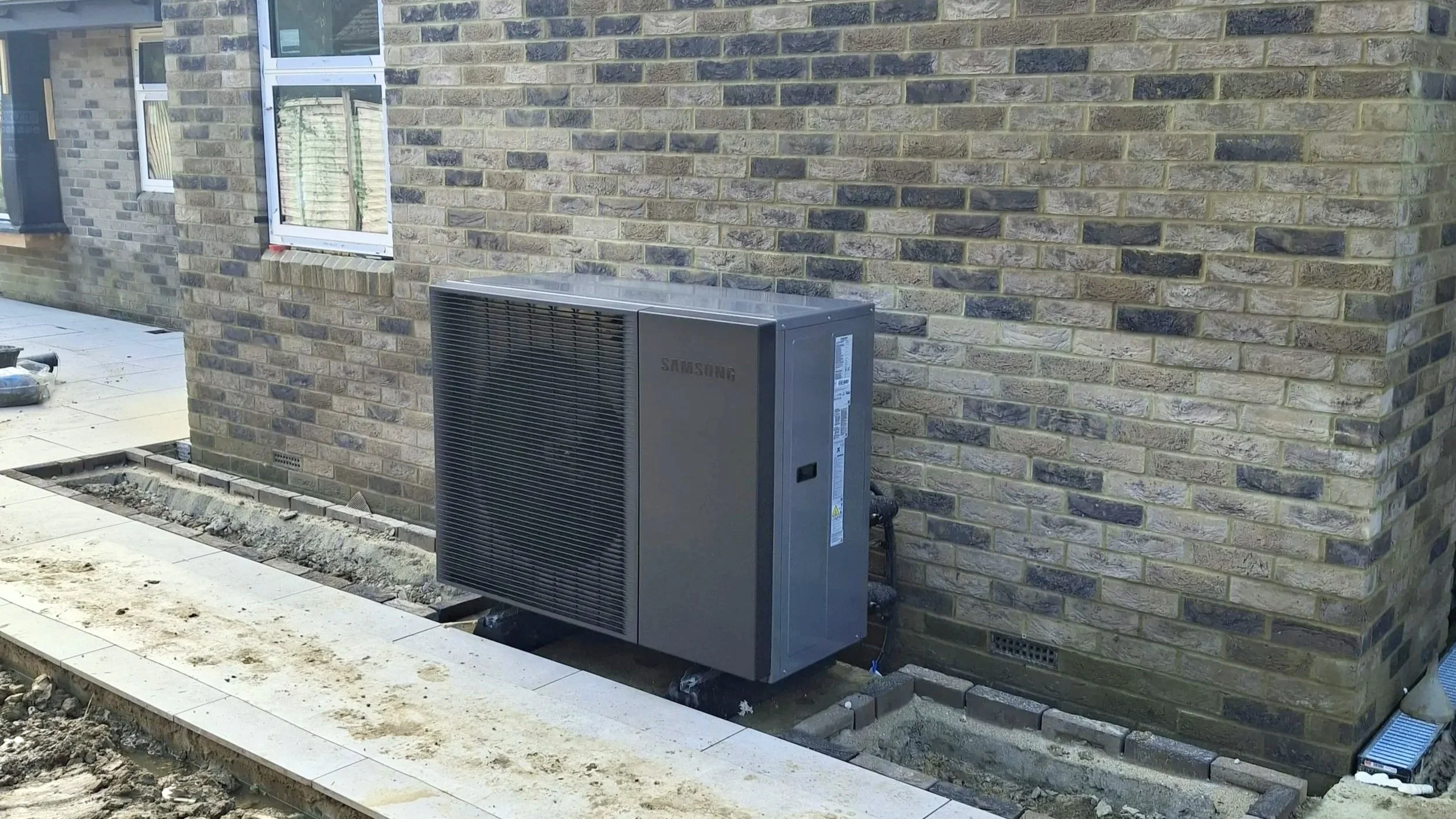
Planning for MCS from the start
Planning for certification before installation is essential. For housebuilders and developers, early planning helps avoid potential issues with SAP calculations, warranty requirements, and Building Control documentation later in the project.
Working with an experienced MCS partner from the outset ensures the system is properly designed for the property, installed to recognised standards, and supported after completion. It also means every home benefits from a heating system that performs as intended.
Developers who work with Alto Energy are supported from the earliest stages of a project through to final certification. We assist with system design, specification, installer guidance, commissioning, and the documentation required for MCS compliance, making it easier to deliver heat pump installations that are efficient, reliable, and fully compliant.
By partnering with a trusted MCS umbrella provider like Alto Energy, developers can move forward with heat pump installations confidently while continuing to work with their existing plumbing contractors.
If you are planning a development and would like to understand how our MCS umbrella scheme can support your project, please get in touch to find out more.